The NIH HPC group plans, manages and supports
high-performance computing systems specifically for use by the
intramural NIH community. These systems include
Biowulf,
a 105,000+ processor
Linux cluster;
Helix, an interactive system for
file transfer and management, and
Helixweb, which provides a number of web-based
scientific tools. We provide access to a wide range of computational
applications for genomics, molecular and structural biology, mathematical and
graphical analysis, image analysis, and other scientific fields.
The continued growth and support of NIH's Biowulf cluster is dependent upon
its demonstrable value to the NIH Intramural Research Program. If you publish
research that involved significant use of Biowulf, please cite the cluster.
Suggested citation text:
This work utilized the computational resources of the NIH HPC Biowulf cluster (https://hpc.nih.gov).
|
Quick Links
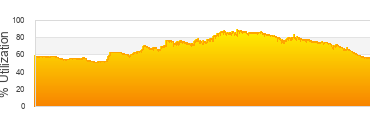
Biowulf Utilization
Tuesday, October 27th, 2026
|
Last 24 hrs
|
|
124,795 jobs submitted
105,903 jobs completed
1,514,698 CPU hrs used
|
23 NIH Institutes
352 Principal Investigators
765 users
|
Announcements
|
Recent Papers that used Biowulf & HPC Resources
|
The relationships between figure rating scale, anthropometric measures, and cardiometabolic outcomes: the AADM study
Doumatey, AP; Idris, A; Zhou, J et al.
Diabetes Metab Syndr
, DOI://10.1016/j.dsx.2026.103456 (2026)
A Case of a Fumarate Hydratase Deficient Astrocytoma in Association With a Germline Fumarate Hydratase Mutation With Review of the Literature: Considerations for Patients With Hereditary Leiomyomatosis and Renal Cell Cancer (HLRCC) Syndrome
Alfattal, R; Nagarajan, P; O'Brien, B et al.
Am J Surg Pathol
, DOI://10.1097/PAS.0000000000002463 (2026)
Quantitative validation of the \"coastline\" heuristic for café-au-lait macule borders in neurofibromatosis type 1 and McCune-Albright syndrome
DiFrischia, M; Hu, P; Waikel, RL et al.
J Am Acad Dermatol
, DOI://10.1016/j.jaad.2026.08.007 (2026)
A Novel Sulfatide Analog Recognized by Human iNKT Cells Enhances Polyfunctional Antigen-Specific CD8+ T Cell Responses
Hara, A; DiSapio, J; Coombs, M et al.
Eur J Immunol
, DOI://10.1002/eji.70285 (2026)
Secreted filarial acetylcholine analogs modulate parasite reproduction and host physiology
Grote, A; Ficaro, L; Koussa, J et al.
Nat Commun
, DOI://10.1038/s41467-026-77090-2 (2026)
Large-scale blood pressure GWAS accounting for gene-depression interactions in 564,680 individuals from diverse populations
Lee, S; Miller, CL; Bentley, AR et al.
HGG Adv
, DOI://10.1016/j.xhgg.2026.100566 (2026)
A new AI assisted approach aligns data standards and accelerates interoperability in biomedical research
Long, RA; Ballard, S; Shah, S et al.
NPJ Digit Med
, DOI://10.1038/s41746-026-02795-z (2026)
Cytotoxic Microspinosamides from the Marine Sponge Geodia microspinosa That Decrease Diffuse Pleural Mesothelioma Viability
Orfanoudaki, M; Wang, D; Du, L et al.
Mar Drugs
, DOI://10.3390/md24090308 (2026)
|
|
 All Services Operational